
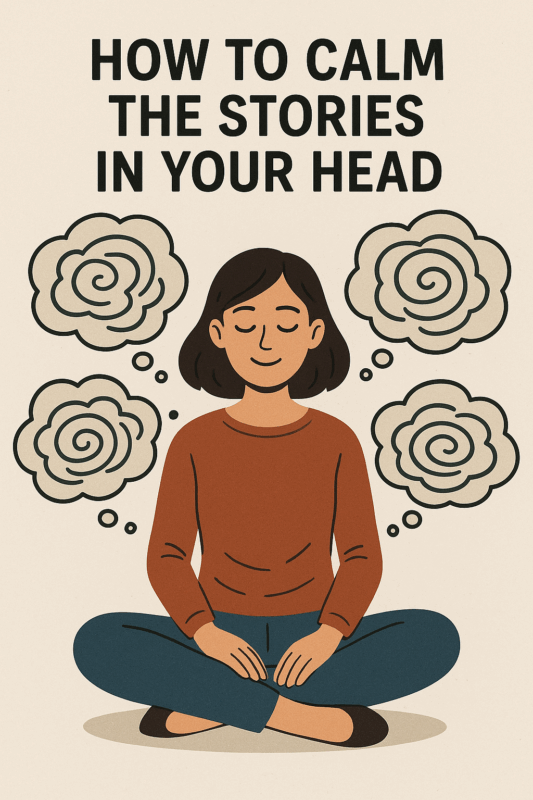
Hey there, welcome back to A Little Zen, A Little Mess — the space where we take five mindful minutes to understand why our brains do what they do.
I’m your host, Seema, and today we’re talking about something we all do: imagining the absolute worst before the best.
You know the drill — your friend doesn’t text back for two hours and suddenly your brain whispers,
“Well, that’s it… something’s wrong, or worse, they probably hate me.”
We laugh, but this happens a lot. So… why?
Our Brains Are Built for Protection, Not Peace
Thousands of years ago, assuming the worst kept us alive.
If you heard a rustle in the bushes, it was safer to imagine a tiger than a friendly squirrel. That quick jump to danger meant survival.
Fast forward to today — we’re not running from tigers anymore, but our brains still haven’t gotten the memo.
Now the “bushes” are unread emails, awkward texts, uncertain job interviews, or a message that simply says, “Hey, we need to talk.”
The alarm still goes off… even when there’s no real threat.
A Real-Life Spiral: Ritika’s Story
A friend of mine, Ritika, once got an email from her boss on a Friday afternoon:
“Can you stop by my office Monday morning? We need to talk.”
That’s it. No emojis. No context. Just pure doom.
She spent the entire weekend spiraling:
- “I must’ve messed up the report.”
- “I’m getting fired.”
- “I’ll never recover from this.”
By Sunday night, she had practically drafted a goodbye email to her coworkers.
Come Monday?
Her boss simply wanted to thank her — the client had loved her presentation.
Ritika laughed about it later, but it’s the perfect example.
Her brain wasn’t trying to torture her — it was trying to prepare her for potential pain. It wanted her to survive disappointment.
Your Imagination Is a Powerful Movie Screen
We’re the writers, directors, and producers of the mental movies we create.
The problem? We often default to horror instead of hope.
But what if we practiced writing a different script?
A Simple Trick to Break the Spiral
Next time you catch yourself spiraling, try asking:
- “What’s the best thing that could happen?”
- “What’s the most likely thing that will happen?”
That small pause — that reality check — starts to rewire your mental reflexes.
You’re not ignoring risks, but you’re giving optimism equal airtime.
So the next time your brain starts drafting a worst-case scenario, smile and say:
“Thanks, brain. I see what you’re doing. But let’s also run the ‘maybe-it-will-be-awesome’ simulation.”
Because when we imagine the best, we open the door for it to actually happen.
Wrapping Up
That’s it for today’s episode!
If you enjoyed this reflection, share it with a fellow overthinker who might need the reminder that not every silence is a storm.
Until next time — think kind, not just safe.
